You are viewing 1 of your 1 free articles
NIHE to move residents out of Belfast tower due to cladding fire risk
The Northern Ireland Housing Executive (NIHE) has told residents of a tower in East Belfast that they will have to leave their homes due to concerns over fire risk from the cladding.


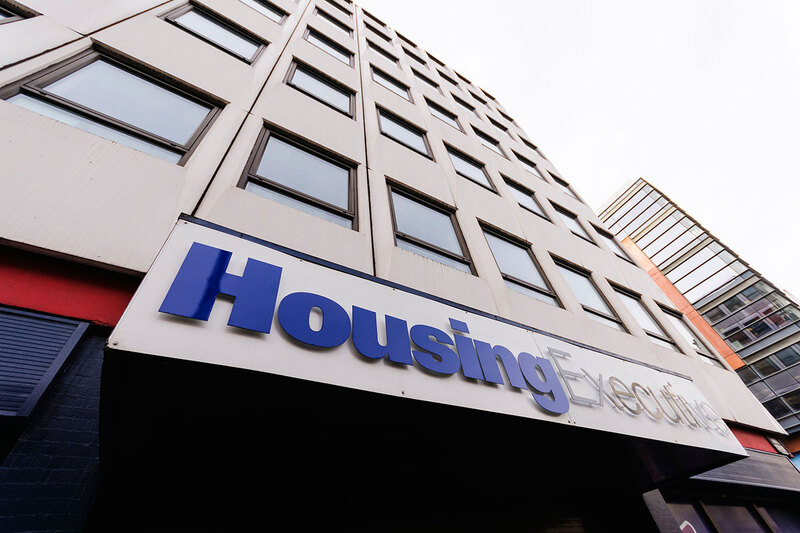 NIHE to move residents out of Belfast tower due to cladding fire risk #UKhousingThe Northern Ireland Housing Executive has told residents of a tower in East Belfast that they will have to leave their homes due to fire risk from the cladding #UKhousing
The public housing authority said it has taken the “difficult but necessary” decision to close the 15-storey Carnet House in Dundonald after detailed assessments found that external walls pose a fire risk.
The block on the Ardcarn Estate also has a significant problem with leaks, according to the NIHE, and requires a “substantial programme of work” to remove and replace the external fabric.
The work will be too disruptive for residents to stay in their homes, so clearance of the block will start this month.
Paul Isherwood, director of asset management at the NIHE, said: “The decision has followed detailed assessments of the building’s condition and fire safety and has been made solely in the interests of the safety, comfort and well-being of our tenants and residents, which remains our paramount concern.”
The 72-home high-rise was built in 1966 by the Northern Ireland Housing Trust and is located a short distance from the Stormont Estate, the site of Northern Ireland’s parliamentary buildings.
The NIHE owns 62 flats in the block, of which 33 are currently in occupation. The remaining 10 flats are owned by leaseholders.
Carnet House was one of a number of NIHE blocks that were reclad in 2017 and the building was being refurbished at the time of the Grenfell Tower fire.
The cladding system is an external wall insulation system with 120mms of fire retardant polystyrene, covered with a 9mm reinforced plaster render. It is different to the systems on other NIHE blocks.
After the Grenfell tragedy, the housing body told the BBC that it had arranged meetings with the manufacturers of the cladding “to receive extra reassurance”.
Carnet House was later included in NIHE’s tower block action plan, a strategy launched in 2019 for refurbishment and redevelopment across its portfolio of 33 high-rise buildings.
According to implementation plans published at the time of the strategy’s launch, NIHE’s plan was to retain Carnet House and deliver “full improvement works” to the block.
The document said there had been “significant investment” in cladding, new windows and a new roof, and that demand for the block was “sustainable”.
Mr Isherwood said: “Closure represents the most responsible and sensible option.
“It underlines the imperative for continued investment in existing housing stock, as well as new homes, to ensure we are able to meet health safety and comfort standards for households across Northern Ireland.
“We understand that Carnet House has been home to many residents over many years and they will be concerned at the prospect of moving. Our team will be on hand to provide advice and assistance during every step of this process, to make it as smooth as possible.
“We will now move quickly to begin the relocation of all residents living in Carnet House. We have written to residents to set out the next steps and the support that will be available to them throughout this process.
“We will of course continue to maintain fire safety measures and repairs while the process of clearance continues.”
Since the Grenfell fire, the NIHE has been carrying out fire risk assessments of its high-rise stock to “benchmark” its fire safety policies against the higher fire safety regulations being implemented in England and Wales in the wake of the tragedy.
Under the tower block action plan, the NIHE will demolish four buildings early 2026 and an additional five are scheduled to come down later this year.
Sign up to Inside Housing’s Northern Ireland newsletter
Sign up to Inside Housing’s Northern Ireland newsletter, a fortnightly round-up of all the key news and insight affecting the Northern Irish affordable housing sector.
Click here to register and receive the Northern Ireland newsletter straight to your inbox.
And subscribe to Inside Housing by clicking here.
Already have an account? Click here to manage your newsletters.
Related stories