You are viewing 1 of your 1 free articles
We decided to stop avoiding the tough conversations about social housing and immigration, and here’s what we learned
Anna Bishop, chief executive at South Liverpool Homes, explains the landlord’s campaign to tackle misinformation about ‘who gets our homes’ and how other housing providers can access their toolkit of resources


 Anna Bishop, chief executive at South Liverpool Homes, explains the landlord’s campaign to tackle misinformation about ‘who gets our homes’ and how other housing providers can access their toolkit of resources #UKhousing
Across the country, housing associations are facing a growing challenge around misconceptions and myths about housing allocations, often fuelled by wider narratives around immigration. Inside Housing’s new investigation shows the impact this misinformation is having on providers, staff and residents.
For many organisations, the default response has been to avoid these conversations publicly, often out of fear of escalation, scrutiny or reputational risk. But silence isn’t neutral. In our experience at South Liverpool Homes, silence creates a vacuum, and misinformation soon rushes in to fill it.
Our campaign, Let’s Talk Facts – Who Gets Our Homes, addresses this challenge directly. Read more about the campaign on Inside Housing Management.
In recent years, we have seen a sharp increase in misinformed and often racist narratives on social media. Many focused on the belief that immigrants were being prioritised for homes. This viewpoint wasn’t just confined to social media: customer-facing colleagues were facing the same issues, and our contact centre was increasingly dealing with complaints that our allocations process was unfair.
These narratives are not only inaccurate, they can cause real harm. They fuel mistrust, increase tension and can spill over into racist or abusive language that makes people feel unwelcome or unsafe in their own communities. They also place additional strain on customer-facing colleagues, who are left dealing with anger or hostility that could have been avoided with clearer communication.

We were clear from the outset that Let’s Talk Facts – Who Gets Our Homes was not a one‑off communications exercise. The campaign helped reposition allocations from a defensive issue into an open, ongoing dialogue, establishing transparency as business as usual rather than something rolled out only when tensions rise.
We began with listening. Our insight showed that while racism and harmful language were present, they were not always the primary driver. The deeper issue was confusion and frustration.
Customers told us they didn’t understand how decisions are made, why waiting lists are so long or what ‘fair’ really looks like in practice. When people don’t have access to clear explanations, misinformation fills the gap, often fuelled by social media and hearsay.
Our surveys revealed the extent of that gap. Most customers said they had little or no understanding of allocations (76% of the 522 customers surveyed), fewer than four in 10 believed the process was fair and a significant minority believed immigration status or ethnicity influences who gets a home.
These narratives are inaccurate, but they are powerful. Left unchallenged, they erode trust, strain community relationships and place customer-facing colleagues in increasingly difficult positions.
Among colleagues, 68% reported frequent encounters with these misconceptions, often combined with hostility or distress from customers. More than three-quarters of colleagues told us that they are familiar with the allocations policy, but less than half were confident in explaining the process.
We knew we had to respond quickly and openly. We designed our campaign around honest conversations, with empathy at its core.
We explained how homes are allocated, acknowledged the reality that demand far outstrips supply and were open about why waiting times can be long. We clearly stated that homes are allocated based on need, not background, and that questions and comments are welcome, but racist or abusive language is not.
What became clear very quickly is that facts alone are not enough. How we communicate matters just as much as what we say. People needed to feel heard, even when the outcome was not what they hoped for. Balancing empathy with firmness helped de-escalate difficult conversations and, in some cases, saw community members begin to challenge misinformation themselves.
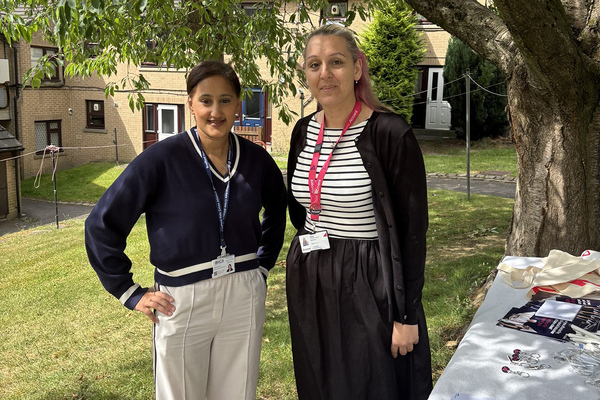
Some of the most impactful moments happened face to face. We hosted small, informal community sessions which created space for open, respectful conversations about allocations and the realities of the housing shortage.
They were not easy discussions, but they were honest ones. People valued being trusted with the facts, even when those facts were hard to hear, and they left better informed about a process they had previously viewed with suspicion.
The campaign reinforced that colleagues needed to be better equipped with the facts. Questions about who gets a home arise everywhere: in contact centres, during neighbourhood visits, at repair appointments and in conversations with councillors and MPs.
“Our aim is to help the sector speak with a clearer, more consistent voice and to support colleagues who are already having these difficult conversations every day”
Our colleague insights showed a clear gap between knowing the policy and feeling confident enough to explain it under pressure. To help colleagues respond calmly and consistently, we invested in practical internal support, creating clear FAQs, scripts, briefings, training and visible leadership backing.
Perhaps the most important learning of all is that none of this is unique to south Liverpool. The same anxieties, myths and tensions are appearing across the country, shaped by the housing crisis, political narratives and the dynamics of online spaces. These pressures are national, but they are experienced locally. And while no single organisation can solve that alone, the sector is stronger when it acts collectively.
That is why we have turned our learning into a practical, shareable toolkit for other housing associations. It is not a one-size-fits-all solution, but a set of adaptable tools covering key messages, tone of voice, colleague support, campaign delivery, community engagement and evaluation. Our aim is to help the sector speak with a clearer, more consistent voice and to support colleagues who are already having these difficult conversations every day.
For us, this work has reinforced a simple truth. Avoiding difficult conversations does not protect trust; tackling them openly, calmly and collectively does.
From a small housing association, looking at a national issue through a local lens, our hope is that this toolkit helps amplify a shared sector voice – one that is grounded in facts, guided by empathy and strong enough to address the challenges our communities are facing.
Anna Bishop, chief executive, South Liverpool Homes
Sign up to Inside Housing’s Daily News bulletin
Sign up to Inside Housing’s Daily News bulletin, featuring the latest social housing news delivered to your inbox.
Already have an account? Click here to manage your newsletters.
Related stories